
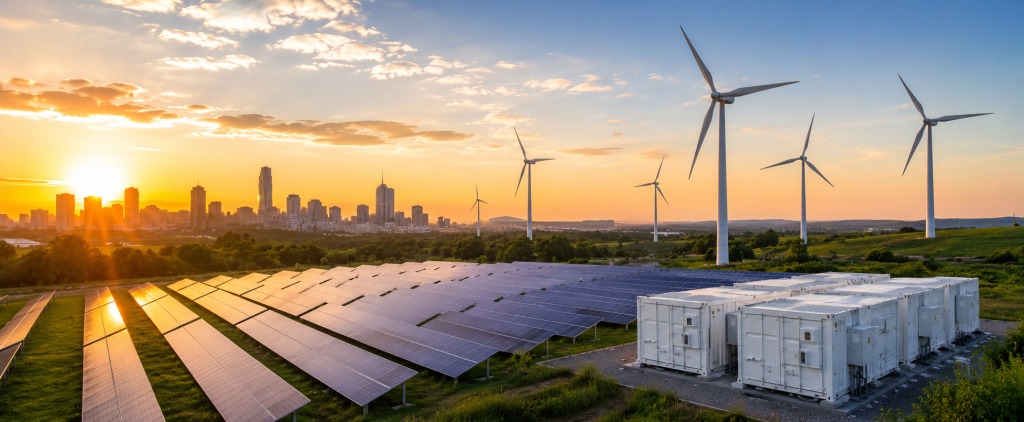
Africa is experiencing a rapid transformation in energy demand as populations continue to grow, urbanization accelerates, and industries expand across the continent. Reliable electricity is no longer just a convenience — it has become a critical foundation for economic growth, technological advancement, industrial productivity, healthcare delivery, education, and overall national development. However, despite the enormous opportunities available across the continent, many regions still face significant challenges related to unstable power supply, outdated infrastructure, rising energy costs, and limited access to electricity.
As governments, private organizations, and communities seek long-term solutions to these challenges, sustainable energy infrastructure is emerging as one of the most important drivers of Africa’s future growth and development. Across the continent, investments in renewable energy systems, smart grid technologies, mini-grid power solutions, and modern energy infrastructure are increasing rapidly as organizations look for cleaner, more reliable, and cost-effective alternatives to traditional energy systems.
One of the most transformative developments in recent years has been the rise of solar mini-grid systems. These systems are helping bridge the electricity access gap in underserved communities, remote locations, industrial clusters, and developing urban areas where access to stable national grid infrastructure remains limited. Mini-grid solutions provide localized and scalable energy systems capable of delivering reliable electricity while reducing dependence on fossil fuels and centralized power distribution challenges.
In addition to mini-grid systems, captive power solutions are also becoming increasingly important for businesses, manufacturing plants, healthcare institutions, and commercial facilities that require uninterrupted electricity for daily operations. Frequent power outages and unstable supply can significantly affect productivity, operational efficiency, and profitability. By investing in dedicated energy infrastructure, organizations are able to maintain operational continuity, reduce downtime, and improve long-term energy reliability.
The future of sustainable energy infrastructure in Africa is not limited to power generation alone. Smart energy management systems, battery storage technologies, energy monitoring platforms, and intelligent distribution networks are also reshaping how electricity is managed and consumed. These technologies allow organizations to optimize energy usage, reduce waste, lower operational costs, and improve overall energy efficiency.
Environmental sustainability also remains a major factor driving the adoption of renewable and alternative energy solutions across the continent. As concerns around climate change, carbon emissions, and environmental degradation continue to grow globally, African nations are increasingly prioritizing cleaner energy alternatives that support long-term environmental responsibility while meeting rising energy demands.
Furthermore, sustainable energy infrastructure has the potential to create significant economic opportunities across Africa. Investments in energy projects stimulate job creation, industrial development, infrastructure expansion, and technological innovation. Communities with access to stable electricity are better positioned to support small businesses, educational institutions, healthcare facilities, and digital transformation initiatives that contribute to long-term socio-economic growth.
At Broad Rail Limited, we recognize the critical role that modern energy infrastructure plays in shaping Africa’s future. We remain committed to delivering innovative, scalable, and reliable energy solutions designed to support sustainable growth across industries and communities. Through advanced engineering, renewable energy integration, infrastructure development, and operational excellence, we continue to help organizations build future-ready systems capable of meeting evolving energy demands in an increasingly connected and industrialized world.
As Africa continues its journey toward modernization and economic expansion, sustainable energy infrastructure will remain one of the key pillars driving progress, resilience, and long-term prosperity for generations to come.