
In today’s highly competitive business environment, organizations are constantly searching for ways to improve efficiency, reduce operational costs, and maximize long-term profitability. One of the most overlooked yet highly impactful areas of operational improvement lies within energy management. Many businesses unknowingly lose substantial amounts of money every year through inefficient energy usage, outdated systems, excessive consumption, and poor energy monitoring practices.
Energy costs continue to represent a significant portion of operational expenses for industries, commercial facilities, manufacturing plants, healthcare institutions, hospitality businesses, and office complexes. Without proper analysis and optimization, businesses often experience unnecessary energy waste that directly affects overall productivity and financial performance. This is where professional energy audits become extremely valuable.
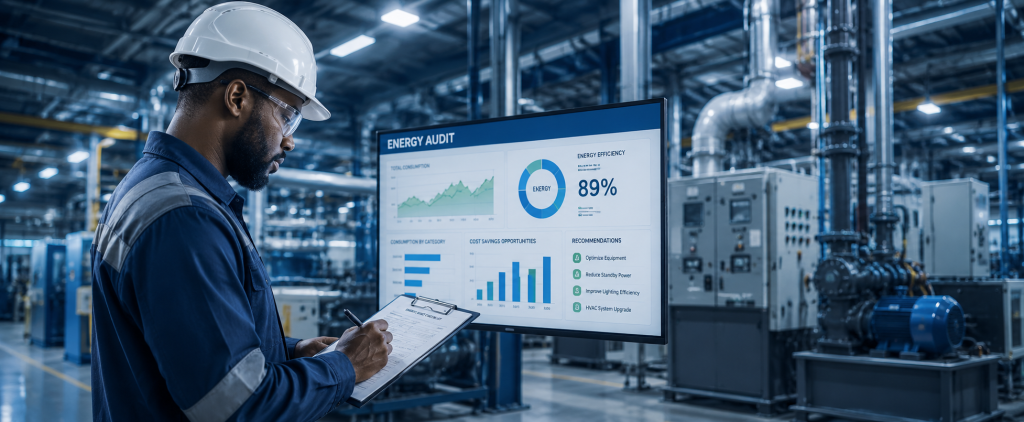
An energy audit is a comprehensive assessment of how energy is being consumed within a facility or organization. The process involves evaluating electrical systems, operational equipment, lighting infrastructure, cooling systems, machinery, and general power usage patterns to identify inefficiencies and opportunities for improvement. Through detailed analysis and performance monitoring, organizations gain valuable insights into areas where energy consumption can be optimized.
One of the primary benefits of a professional energy audit is cost reduction. By identifying wasteful energy practices, inefficient equipment, or excessive power consumption, businesses can implement targeted improvements that significantly lower monthly utility expenses. Even small operational changes identified during an energy audit can generate substantial long-term savings over time.
Energy audits also play an important role in improving operational efficiency. Equipment that consumes excessive energy often experiences reduced performance, increased wear and tear, and shorter operational lifespan. Through proper energy optimization strategies, businesses can improve equipment performance, reduce maintenance requirements, and extend the lifespan of critical infrastructure and machinery.
Another important advantage of energy audits is sustainability and environmental responsibility. As businesses increasingly prioritize environmental compliance and sustainable operations, reducing unnecessary energy consumption has become a major organizational objective. Energy-efficient operations help reduce carbon emissions, minimize environmental impact, and support corporate sustainability goals while also improving public perception and brand reputation.
Modern energy audits are now supported by advanced monitoring technologies, intelligent analytics systems, and digital energy management platforms that provide real-time visibility into energy performance. These technologies allow organizations to make data-driven decisions regarding power usage, operational planning, and infrastructure upgrades that improve overall business performance.
For industrial facilities and manufacturing environments, energy audits can uncover hidden inefficiencies within production systems, heavy equipment operations, compressed air systems, heating and cooling infrastructure, and electrical distribution networks. Correcting these inefficiencies not only reduces energy waste but also improves production stability, operational reliability, and workplace safety.
In commercial environments such as office buildings, hotels, hospitals, and educational institutions, energy audits often identify opportunities to optimize lighting systems, HVAC operations, backup power infrastructure, and general electrical consumption. These improvements can significantly reduce operational costs while improving comfort, productivity, and facility performance.
At Broad Rail Limited, we provide professional energy audit services designed to help organizations gain complete visibility into their energy performance and operational efficiency. Our experienced team conducts detailed assessments, technical evaluations, and performance analysis to identify practical solutions that improve energy management, reduce waste, and support long-term operational sustainability.
As energy demands continue to rise and operational costs become increasingly important, businesses that prioritize energy efficiency and proactive energy management will be better positioned for long-term growth, profitability, and resilience in an evolving economic landscape.